
How it works
Imagine two horizontal and two vertical lines dividing your photo into nine equal parts. Place the most interesting parts of the shot along those lines or where they cross.
Our eyes go to these points naturally, so a subject placed there pulls people in. It also keeps a shot from looking flat by adding depth and a sense of motion.
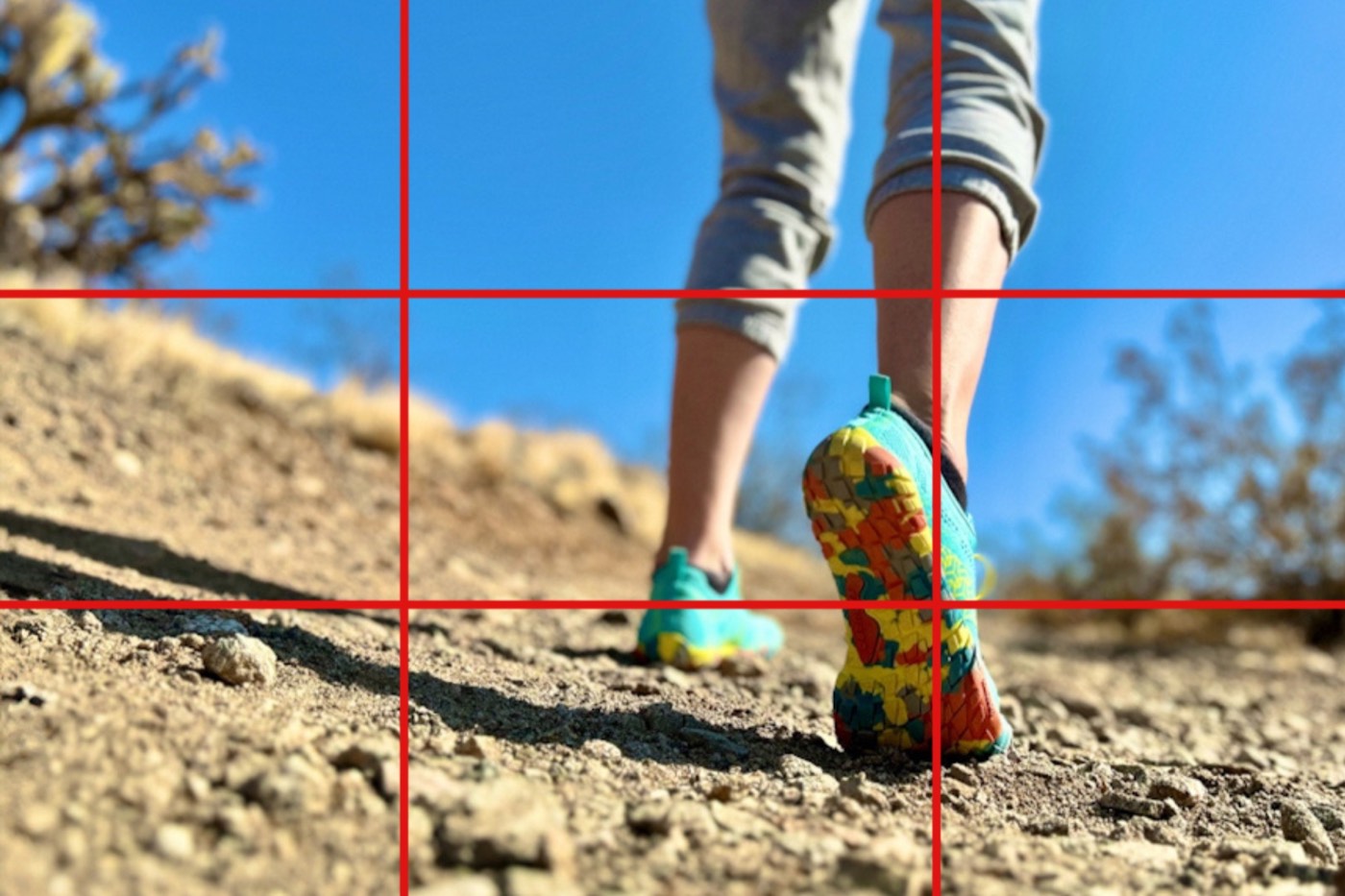
The colorful sole sits on an intersection, and the trail and sky fill the rest of the frame.
Photo by Lisa O
Putting it to work
Subject off center
A common mistake is putting the subject right in the middle. It seems natural, but it often makes a dull photo. Place your subject along one of the vertical lines instead. When you photograph family or friends, an off-center spot shows more of the place around them and adds a feeling of movement.
Intersections
The four points where the lines cross are the strongest spots for your main subject. Photographing someone on a beach? Put their face on an intersection. Viewers see the face first, then what the person is doing, then the space around them.
Horizon placement
When the horizon is part of the shot, keep it out of the center.
- Top line: Use it when the ground is the more interesting part. You’ll show less sky.
- Bottom line: Use it when the sky is the star, like at sunset. You’ll show more sky.
Negative space
Negative space is the open area around your subject. It draws even more attention to the subject, and it leaves room for a destination to add text when they use your photo in their marketing.
Photographing someone on a hike? Place them to one side with their face on an intersection, and let an open clearing and the sky fill the other side.
Vertical shots
The grid works the same way on vertical photos. Place the most important parts of the shot along the vertical lines. It’s a guideline, not a law, so play around with it.
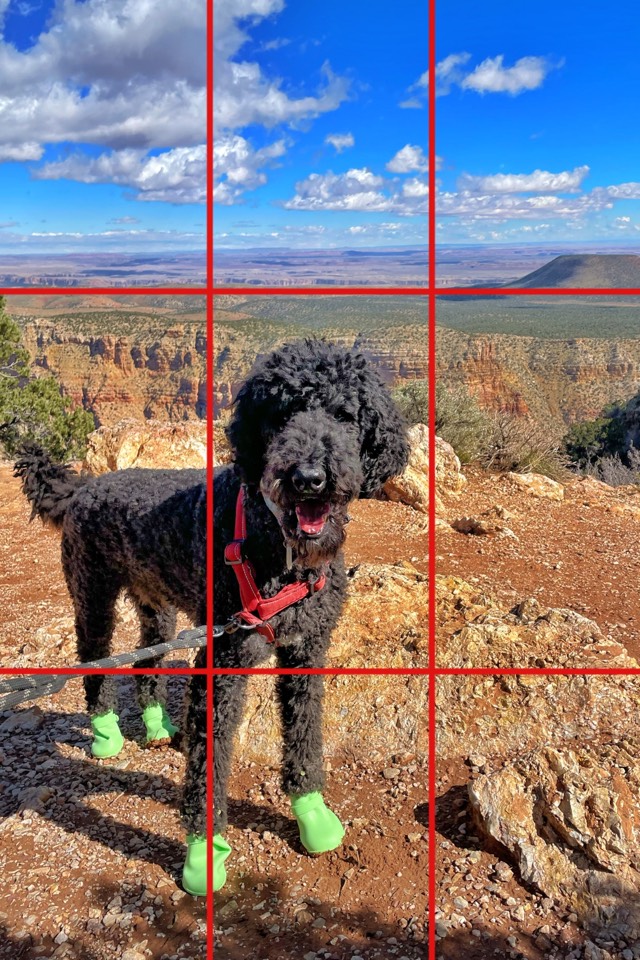
The horizon on the top line gives most of the frame to the ground and the dog.
Photo by Lisa O
Why it works
An off-center photo gives the eye a road map. It leads viewers on a path through the image, which adds story and motion and keeps them looking longer.
On your next visit
- Turn on the grid. Most phones and cameras can show grid lines while you shoot. On an iPhone, open Settings › Camera and turn on Grid.
- Follow natural lines. Line up rivers, shorelines, roads, mountains, trees, and buildings with the grid.
- Know your story. Decide what you want people to notice, then place it on the grid.
- Experiment. Take the same shot with different focal points and compare which tells the story best.